Antibiotic resistance is a global health concern. We are interested in both how antibiotic resistance evolves, and designing treatments to synergize with antibiotics or even replace them.
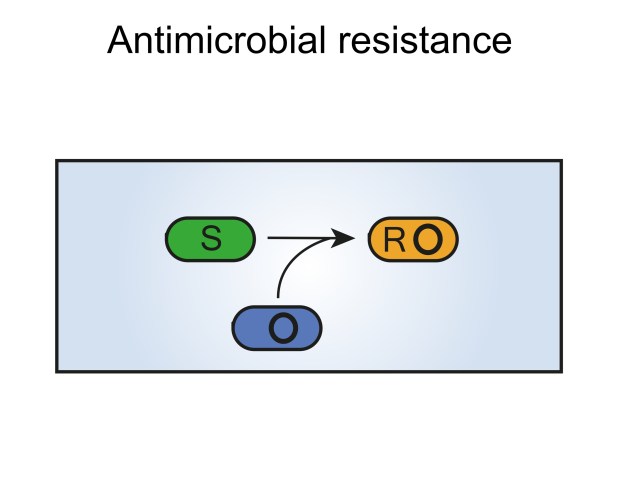
The failure of antibiotics to kill bacteria is an increasing global problem, yet it is still one of the best lines of treatment we have. Much of this problem is driven by the spread of antibiotic resistance. One of the drivers of antibiotic resistance spread is through plasmids, which can encode antibiotic resistance genes and be exchanged between bacteria. We are interested in when and how bacteria interact to exchange antibiotic resistance genes, and what speeds up or slows down this process.
Selected relevant publications:
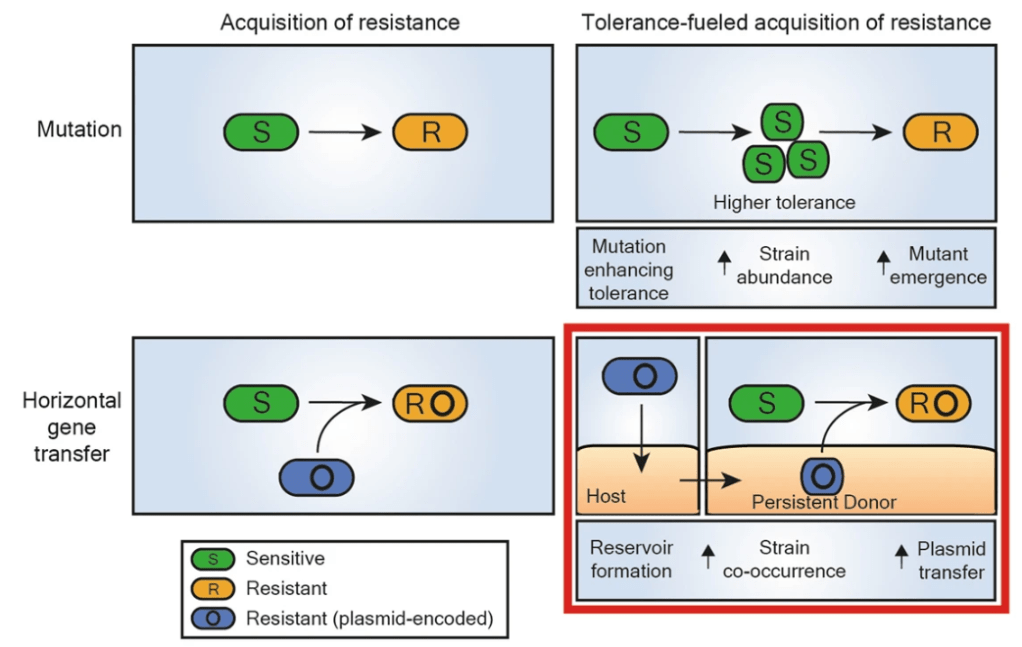
Bakkeren E, Huisman JS, Fattinger SA, Hausmann A, Furter M, Egli A, Slack E, Sellin ME, Bonhoeffer S, Regoes RR, Diard M, Hardt WD. Salmonella persisters promote the spread of antibiotic resistance plasmids in the gut. 2019. Nature.
Click here for a link to the Behind the paper blog post, or here for a podcast highlight from Nature.
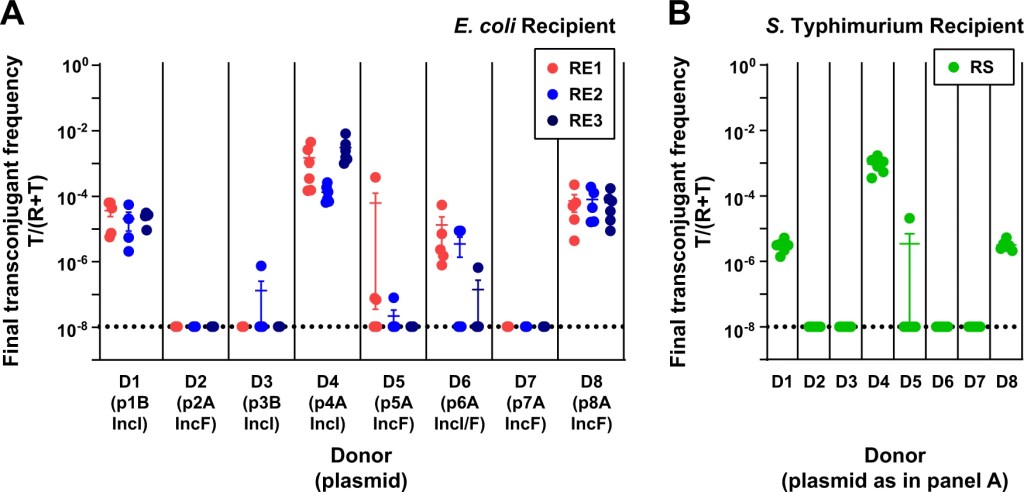
Benz F*, Huisman JS*, Bakkeren E*, Herter JA, Stadler T, Ackermann M, Diard M, Egli A, Hall AR, Hardt WD, Bonhoeffer S. Plasmid-and strain-specific factors drive variation in ESBL-plasmid spread in vitro and in vivo. 2020. ISME J.
Click here for a link to the Behind the paper blog post.
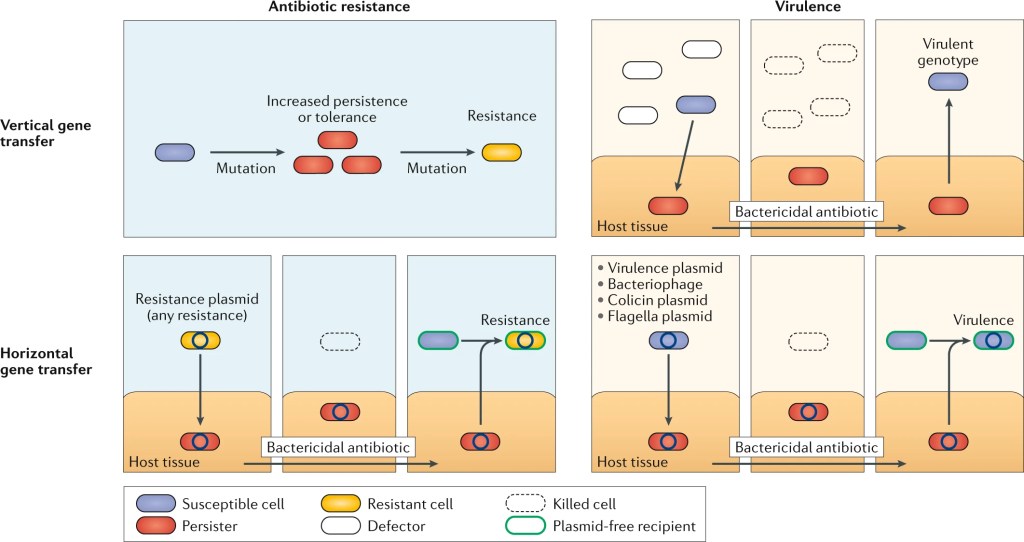
Bakkeren E, Diard M, Hardt WD. Evolutionary causes and consequences of bacterial antibiotic persistence. 2020. Nat. Rev. Microbiol.
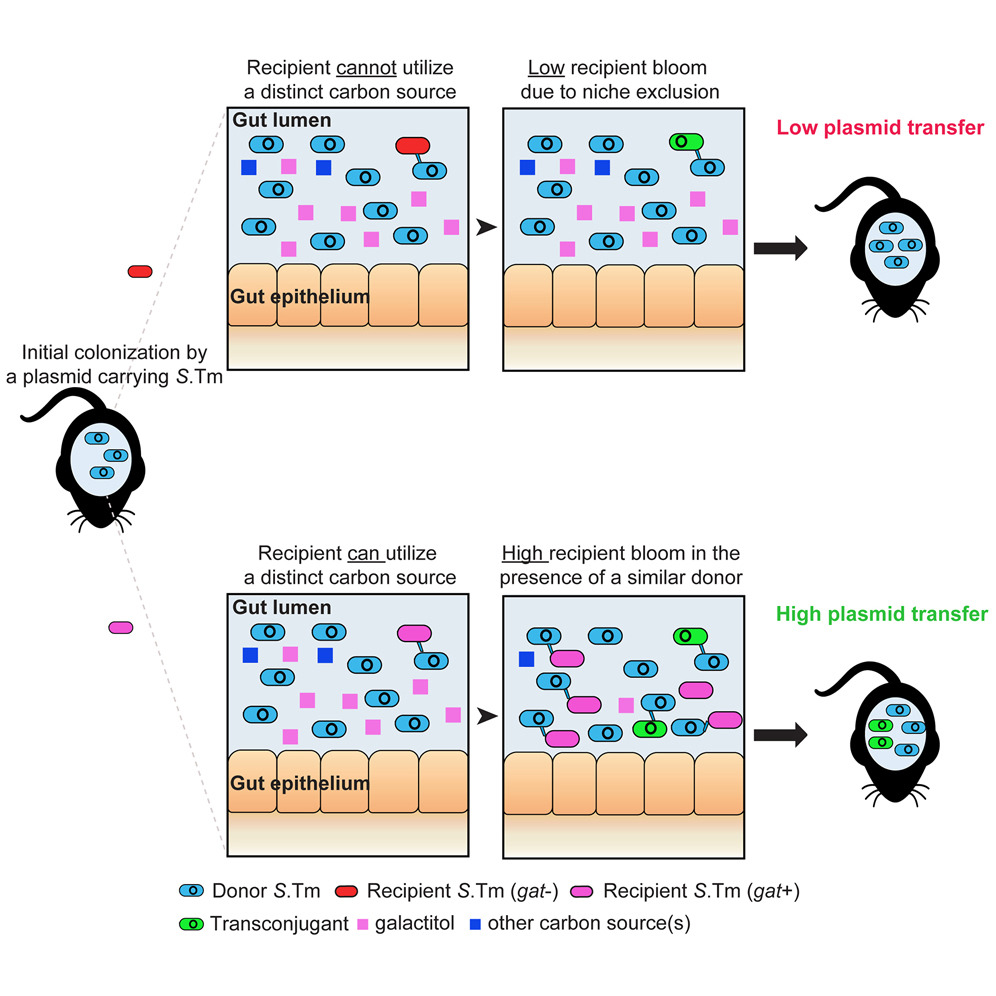
Gül E, Younes AA, Huuskonen J, Diawara C, Nguyen BD, Maurer L, Bakkeren E, Hardt WD. Differences in carbon metabolic capacity fuel co-existence and plasmid transfer between Salmonella strains in the mouse gut. 2023. Cell Host Microbe.
 The Bakkeren Lab